
01. Apr 2026.
Are your production lines ready for 2D codes?

The transition from 1D to 2D codes is becoming the new standard in retail and logistics.
Increasing demands for greater traceability, waste reduction, and improved customer experience are rapidly transforming how products communicate information.
2D codes bring significant advantages: more data, less pressure on packaging design, and new opportunities to connect with end users.
However, their implementation is not simply a change of code — it requires adaptation of the entire production system.
Below are the key factors that directly impact the quality and successful scanning of 2D codes.
Scanning reliability as a fundamental requirement
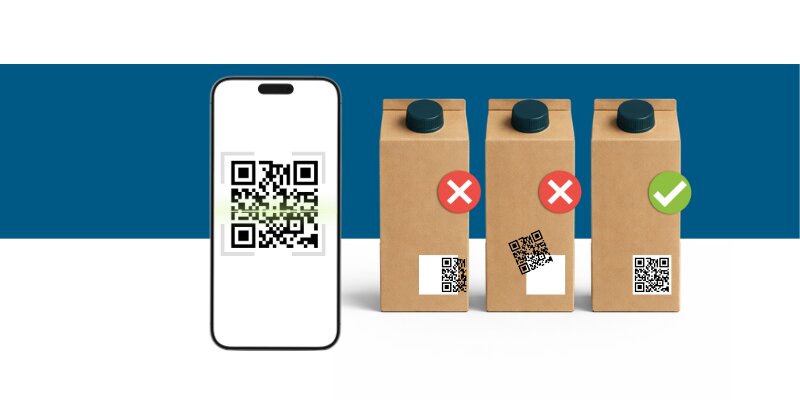
Unlike 1D codes, where it is often sufficient for them to be “readable,” 2D codes must ensure fast and consistent scanning across different environments — from retail to the entire supply chain.
Inconsistent scanning, the need for repositioning, or slower reading speeds directly affect user experience and process efficiency.
As a result, the focus is no longer only on print quality, but on the stability of the entire system.
Cell size – balancing design and functionality
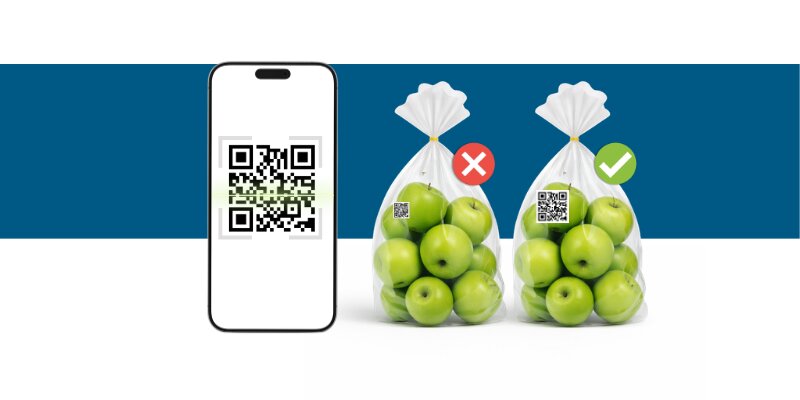
One of the key challenges is determining the optimal cell size of a 2D code.
On one hand, brands aim for smaller codes to preserve packaging aesthetics, while on the other, retailers require codes that can be scanned quickly and reliably.
In practice, codes that are too small may require more precise positioning and additional time to scan, negatively impacting the user experience.
Interestingly, codes that do not achieve the highest grading according to standards can sometimes deliver faster and more consistent scanning — further emphasizing the importance of optimization rather than simply aiming for maximum quality grades.
Data content – potential and risk
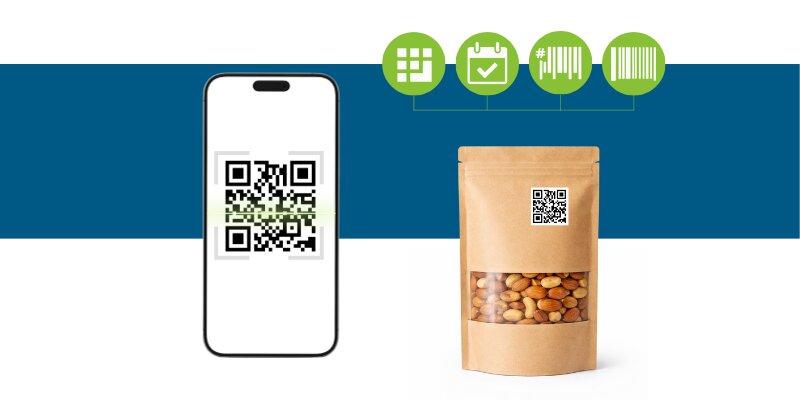
One of the greatest advantages of 2D codes is the ability to integrate various types of data: expiry dates, serial numbers, batch (LOT) information, as well as digital content.
However, this flexibility introduces a new level of responsibility.
A code may be perfectly printed and technically correct, yet still unusable if the data is not properly structured or compliant with standards.
Syntax errors, such as incorrect date formats, can prevent the system from accepting the code despite successful scanning.
For this reason, data control is just as critical as print quality.
Packaging and shape – physical system limitations

Unlike 1D codes, 2D codes require significantly more precise application conditions.
Flat and stable surfaces are essential to achieve the required resolution and quality.
Curved, flexible, or unstable surfaces can lead to code deformation and reduced readability.
In addition, the distance between the print head and the packaging must be minimal, while environmental factors such as temperature and condensation can significantly affect the outcome.
In many cases, this means that packaging design must be adjusted — or even that existing printing technology needs to be upgraded.
Process and quality control
The implementation of 2D codes requires a higher level of control compared to traditional systems.
Occasional or manual checks are no longer sufficient. Continuous, inline verification of code quality during production is essential.
The cost of unreadable codes on the market can be significant, including product recalls, additional logistics costs, and potential retailer penalties.
This is why inline verification systems are becoming the standard, rather than an optional add-on.
Conclusion
The transition to 2D codes is a key step toward modernizing production and improving traceability.
However, successful implementation requires timely planning and a comprehensive approach — from packaging design and data structure to printing processes and quality control.
Companies that take a systematic approach and start preparing early can significantly reduce risks and ensure a smooth transition without production disruptions.
This is where the role of a reliable partner becomes essential.
Elmed, in partnership with Domino technology, delivers complete solutions for printing, verification, and integration of 2D codes in real production environments.
Source: https://www.domino-printing.com/en-gb/blog/2025/practical-manufacturing-and-packaging-considerations-when-printing-gs1-2d-codes