
17. Feb 2026.
From an Automated Line to Stable Production
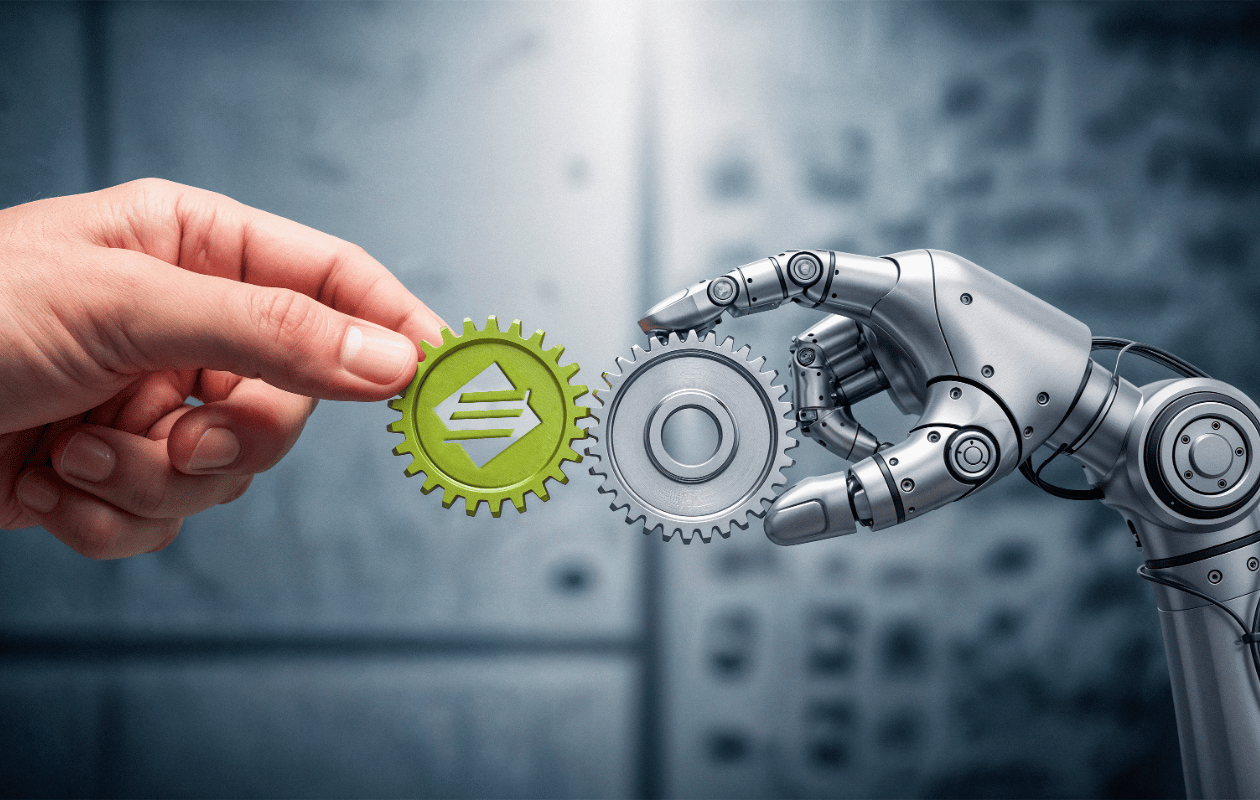
Connectivity does not guarantee resilience
In practice, we often encounter production systems that are connected but not stable. Data exists, but it is not consistent. Equipment is networked, yet it does not understand the context of a production order. A change of batch or product requires manual intervention, additional checks, and operator improvisation.
Such systems function — until something unexpected happens.
Resilient production implies something different:
- production changes are transmitted automatically,
- equipment receives accurate parameters without manual input,
- errors are detected in real time, not in a report at the end of the shift.
Where interoperability truly begins
Our experience shows that the key to interoperability does not lie in a single piece of software or one specific technology, but in the standardization of communication between systems and equipment.
In a typical plant, this means that printers receive data directly from the production order, cameras and vision systems verify accuracy in real time, PLC systems manage processes based on validated data, and robots execute tasks according to the actual production status.
When every element “speaks the same language,” the production line ceases to be a series of isolated points and becomes a coherent system.
Line data as the foundation of resilience
One of the biggest differences between a connected system and a resilient one lies in how data is used. In a resilient system, machine status, produced quantities, downtime, errors, and operating times are not estimates or manual entries — they are primary data collected directly from the equipment.
Such an approach enables accurate OEE measurement, rapid response to deviations, and decision-making based on facts rather than assumptions.
Resilience does not mean that problems do not exist — it means they are detected and resolved in time.
The role of the integrator: bridging IT and production
In industrial practice, there is often a gap between information systems and actual production. This is where the integrator plays a key role — acting as a translator between business logic and the technical reality of the production line.
Resilience is not achieved by installing a single system, but by:
- carefully connecting existing equipment,
- adapting solutions to real processes,
- introducing changes in phases that people can accept and use.
Technology is a tool. People are the ones who make the system functional.
From automation to resilience
Industry is moving beyond basic automation toward intelligent, adaptable systems. The factories that will remain competitive in the long term are not those that are merely “digitalized,” but those that have control, visibility, and trust in their own data.
Resilience does not happen overnight. It is built step by step — through interoperability, standardization, and close collaboration among all stakeholders in the process.
For Elmed, this is not a theoretical concept, but everyday practice on our clients’ production lines.