
13. Jul 2026.
Why does flexographic printing remain unmatched in label production?
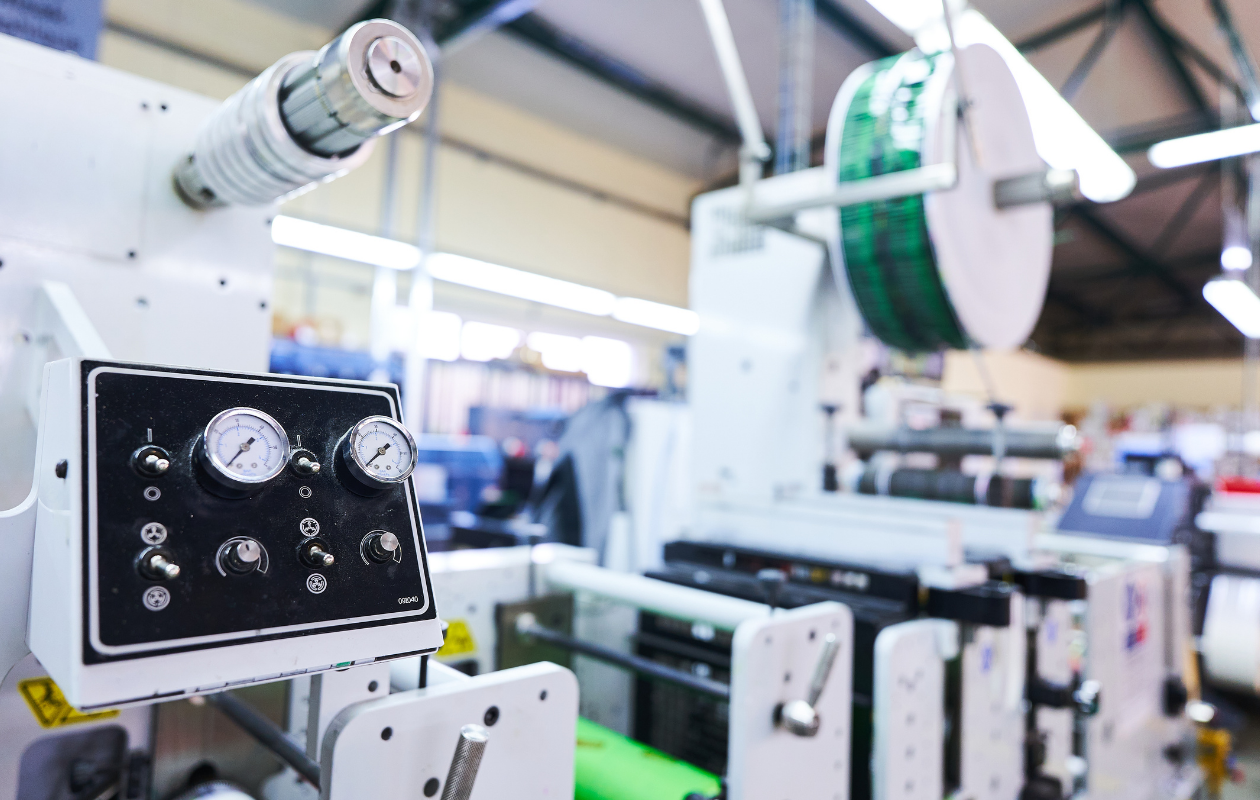
In the production of self-adhesive labels, the choice of printing technology depends directly on the label’s intended use, the type of material, the expected print run, print quality requirements, finishing options, and the method of application to the product. Digital, offset, screen, thermal transfer, and combined printing technologies all have their place in different production segments. However, for labels supplied in rolls, particularly in larger and repeat production runs, flexographic printing stands out in practice as one of the most stable and efficient solutions.
Today, a label carries much more than basic information. It represents the product, communicates the brand, and ensures product declaration, identification, and traceability. It must therefore be printed clearly, precisely, and consistently, while maintaining its quality during storage, transport, and final use.
This is where flexographic printing demonstrates its strengths: speed, repeatability, consistent print quality, and the ability to adapt to different materials and packaging requirements.
Why is flexographic printing still so widely used?
Flexographic printing is a rotary printing process that uses flexible printing plates to transfer ink onto the material. The material passes through the machine in a continuous roll, while the inks are applied through multiple printing units, depending on the design and the number of colours required.
This technology is particularly suitable for the production of self-adhesive labels in rolls, as it enables high productivity, uniform print results, and consistent quality throughout the entire production run.
In practice, flexographic printing is an excellent choice when the following are required:
- larger label print runs
- repeat production runs
- multi-colour labels
- consistent print quality
- labels prepared for automatic or semi-automatic application
- printing on a range of self-adhesive materials
- additional effects and finishing options
Its advantages are particularly evident in larger quantities, where speed, reliability, and a lower cost per label become especially important. Flexographic printing is therefore not merely a traditional technology, but remains a highly efficient industrial standard for label production.
What does the flexographic label printing process involve?
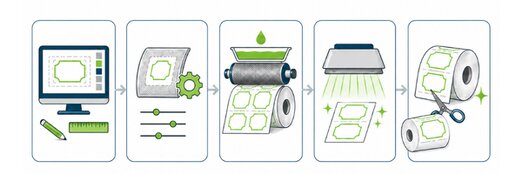
1. Design preparation and technical specification
The process begins with a review of the artwork and the definition of the label’s technical parameters, including its dimensions, shape, number of colours, material, adhesive type, finishing options, and winding direction. At this stage, colour separations and printing plates are prepared to ensure that every design element is transferred correctly onto the material.
2. Printing plate production and press setup
Flexographic printing uses flexible printing plates to transfer the image onto the self-adhesive material. Before production begins, the printing units, pressure, colour registration, and machine parameters are adjusted according to the material and the requirements of the specific job.
3. Ink application and image transfer
Ink is controlled by an anilox roller, which delivers a precise amount of ink to each printing unit. The printing plates then transfer the ink onto the material as it passes through the press in roll form. In multi-colour printing, each colour is applied separately, with precise synchronisation and registration.
4. UV curing and print stabilisation
In UV flexographic printing, the ink is cured with UV light immediately after application. This process enables rapid curing, consistent print quality, good colour durability, and greater resistance during further use. UV flexographic printing is therefore particularly suitable for labels where quality, durability, and visual precision are important.
5. Finishing and rewinding into rolls
After printing, the labels may undergo additional finishing processes, such as varnishing, cold foil application, die-cutting into the required shape, and removal of excess material. The finished labels are then rewound into rolls according to the specified winding direction, core diameter, and the requirements of the application equipment.
Materials play a key role
One of the major advantages of flexographic printing is its ability to work with various types of self-adhesive materials. The choice of material depends on the product, packaging, storage conditions, method of use, and the visual effect the label is intended to achieve.
The most commonly used materials include:
- self-adhesive paper materials for standard declarations and colour labels
- thermal materials for logistics, weighing systems, warehouses, and short-term applications
- film materials, such as PP, PE, and PET, for greater resistance and a more premium appearance
- transparent materials for a “no-label look” effect
- matt, glossy, and specialised materials for more demanding applications
In addition to the material, the choice of adhesive is also important. A label intended for cold conditions, humid environments, uneven packaging, or a product that is handled frequently cannot have the same characteristics as a standard label for a dry and flat surface.
For this reason, a high-quality label should not be assessed solely by its design, but by the product’s entire intended use.
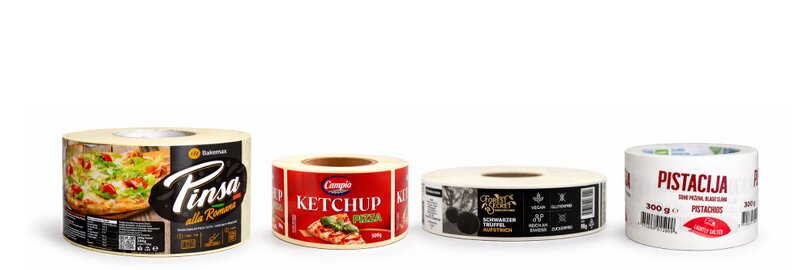
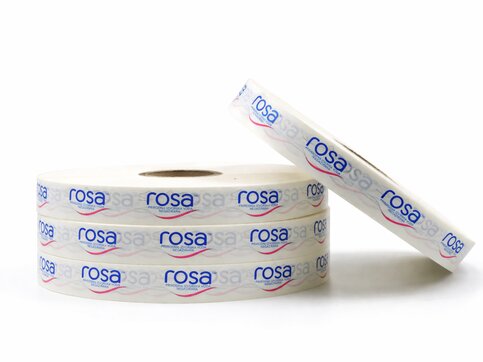
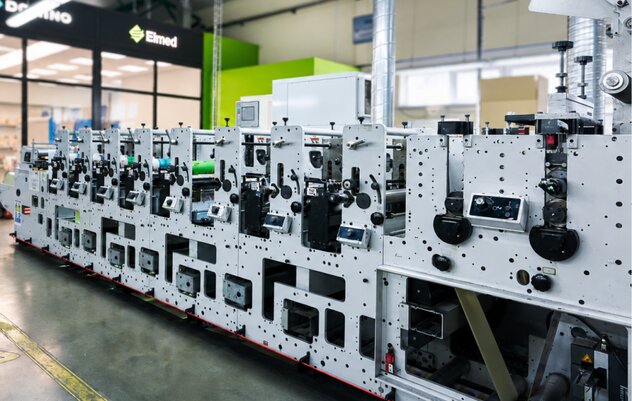
Our goal is not only to produce a visually appealing label, but also one that is technically correct, properly prepared, and ready for reliable application in real production environments.
When is flexographic printing the right choice?
Flexographic printing is the right choice when a label must meet several requirements at the same time: it needs to look good, maintain consistent quality, remain cost-effective in larger quantities, and perform reliably in the subsequent labelling process.
For this reason, flexographic printing remains one of the most important solutions for the production of self-adhesive labels in rolls.
When quality, repeatability, speed, and reliability are required, flexographic printing is not only a good option—for many applications, it is the best choice.